
Make rehabilitation enjoyable with Corpus VR
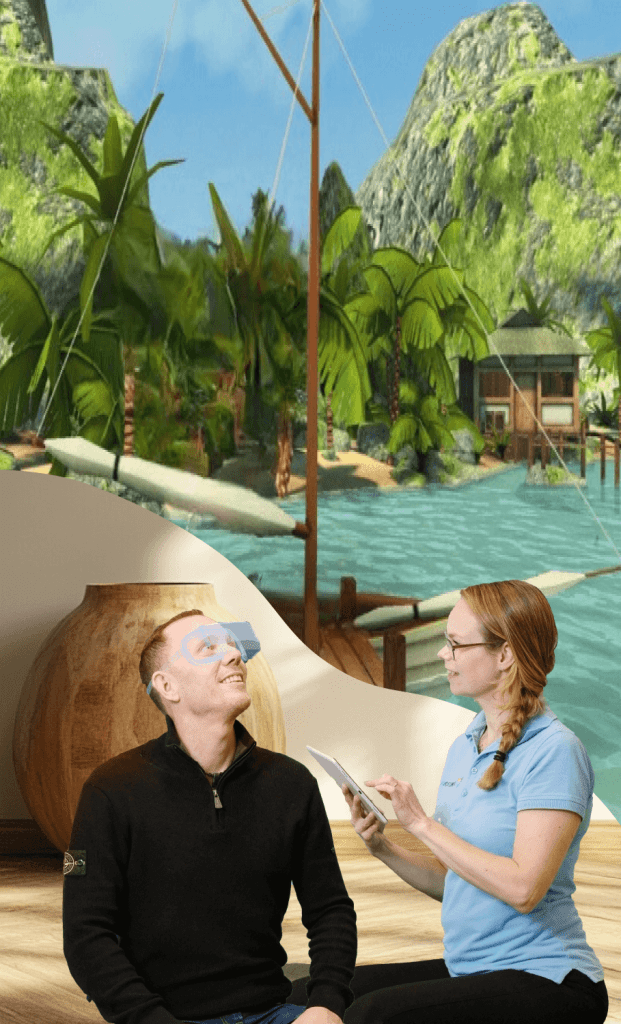
Discover how the innovative VR therapy from Corpus VR can optimize your rehabilitation programs. Our platform offers intensive and effective exercises that accelerate and improve your patients’ recovery process.

Treatment methods and applications

What does this mean for your clinic?
With Corpus VR, you can elevate rehabilitation care to a higher level. Our solutions offer:
- Time savings: Treat multiple patients simultaneously, even remotely.
- Flexibility: Adjust rehabilitation exercises remotely to the specific needs of your patients.
- Efficiency: Monitor your patients’ progress remotely and optimize their rehabilitation treatment.
Solutions for your challenges
Corpus VR is here to support you with various challenges:
- Staff shortages: Reduce the pressure on your care teams with efficient rehabilitation support.
- Insights and communication: Improved communication and insight into your patients’ progress through detailed analytics.
What makes our VR therapy unique?
- Customizable programs: All VR exercises are tailored to the personal goals and level of the patient, ensuring a personalized recovery program.
- Innovative technology: Corpus VR is at the forefront of developing effective and motivating games for rehabilitation training.
- Personalized guidance: You can monitor each patient’s progress and adjust the program as needed for optimal functional recovery.

Analytics, figures, and results
Head of Occupational Therapy Department UZgent
Physiotherapist Chronic Pain Rehabilitation, at ZNA Jan Palfijn
Psychologist, Researcher at Roessingh Rehabilitation

Research
Our VR solutions are not only innovative but also effective. Here are some results:
Effectiveness of VR therapy after a stroke
1. Overall effectiveness of VR therapy
A meta-analysis shows that VR-supported recovery therapy has a significant impact on the functional recovery of patients after a stroke. The results indicate that patients who underwent VR therapy achieved a 30-40% better motor function compared to conventional therapy (measured with the Fugl-Meyer Assessment-Upper Extremity).
2. Balance improvement
Patients who used VR therapy experienced a 40-60% improvement in range of motion, which is a crucial factor for balance and stability within the rehabilitation treatment.
3. Mobility times
The average mobility time of patients improved by 15-25%, meaning they could move faster and more efficiently after intensive rehabilitation training with VR therapy (measured with the Wolf Motor Function Test).
4. Muscle strength
VR therapy contributed to a 25-40% increase in muscle strength in the affected limbs, which is essential for functional recovery and independence (measured with Manual Muscle Testing).
5. Independence in daily activities
Patients reported a 10-20% improvement in self-sufficiency and daily activities (measured with the Functional Independence Measure), indicating more effective recovery guidance.
6. Time savings and efficiency
VR therapy can shorten rehabilitation time through a combination of faster functional improvements, better therapy adherence, and more efficient training. Notably, longer VR interventions (>15 hours) proved to be more effective than shorter programs.
Conclusion
VR therapy offers significant benefits in the recovery process after a stroke. It leads to improvements in motor functions, balance, mobility, muscle strength, and independence, while also supporting efficient rehabilitation processes. These findings highlight the potential of VR as a valuable addition to conventional rehabilitation care.
Source: Chen, J. et al. (2022) Effectiveness of using Virtual Reality–supported exercise therapy for upper extremity motor rehabilitation in patients with stroke: Systematic review and meta-analysis of Randomized Controlled Trials. Journal of Medical Internet Research 24;e24111.
Request a Demo
Are you ready to experience the benefits of VR therapy yourself? Request a demo today and discover how Corpus VR can further improve care in your rehabilitation clinic.